
Posted On: January 16, 2026
Choosing supplements can feel overwhelming. Shelves and screens are packed with products promising more energy, better sleep, sharper focus, stronger immunity, and healthier aging. Each claim sounds convincing, and many are reinforced by social media, influencers, and wellness trends that move faster than science.
At the same time, patients often receive mixed messages—from friends, online sources, and even well-meaning articles that oversimplify complex health issues. This combination can make supplement decisions feel confusing rather than empowering.
Becoming a smart, informed supplement consumer means learning how to separate evidence from hype, understanding when supplementation makes sense, and making decisions based on your individual health. That clarity starts with understanding why targeted, evidence-based supplementation matters.
The body is designed to regulate nutrient balance efficiently. It absorbs what it needs, uses what it can, and eliminates the rest. When supplements are taken without a specific purpose, the excess often provides little benefit.
Targeted supplementation matters because nutrient needs vary widely. Appropriate use is typically based on:
Random supplementation assumes everyone benefits from the same approach. In reality, personalized decisions lead to better outcomes. The guiding principle is straightforward: more is not better.
Supplements are a multibillion-dollar industry, and growth continues every year. While some products are well-studied and useful when used correctly, many are expensive, poorly researched, or promoted far beyond what evidence supports.
It’s also important to remember that supplements are biologically active. They can:
Because of this, thoughtful restraint is often healthier than excess. Consumers benefit most when they approach supplements with curiosity, skepticism, and an understanding that “available” does not automatically mean “safe or effective.”
In the United States, supplements are regulated as food rather than medicine. This classification significantly limits oversight before products reach the market.
Key limitations include:
This is why I believe supplements should be regulated more like medications, with stronger standards for safety, consistency, and quality. Other countries, such as Germany, have more rigorous frameworks that prioritize consumer protection.
Until regulations improve, informed decision-making is essential for safe supplement use.
Before supplements enter the conversation, diet and lifestyle deserve primary attention. Long-term health is built on daily habits, not capsules.
A strong foundation includes:
Supplements can support this foundation when gaps exist, but they do not replace good nutrition or healthy routines.
The following supplements are among those I most commonly discuss with patients. However, whether supplementation is appropriate, and at what dose, should always be reviewed together with your physician
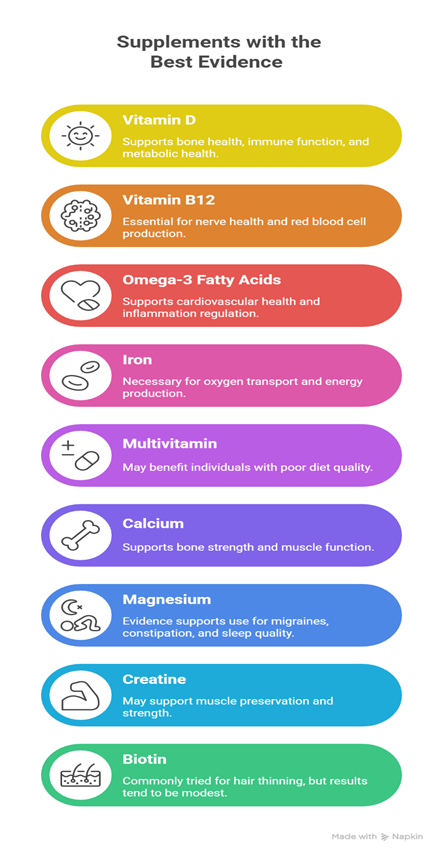
Here is some additional information you might want to go through to know even more about why these supplements are so important for your body.
https://ods.od.nih.gov/factsheets/list-all
https://ods.od.nih.gov/factsheets/VitaminD-Consumer
https://ods.od.nih.gov/factsheets/WYNTK-Consumer
https://www.mayoclinichealthsystem.org/hometown-health/speaking-of-health/multivitamins-and-supplements-to-take-or-not-to-take
Because oversight is limited, product quality matters. Some manufacturers voluntarily submit products for independent testing to confirm purity and accurate labeling.
Common misconceptions include:
Look for certifications such as:
Where supplements are purchased also matters. Some third-party online marketplaces lack consistent sourcing and storage standards. Many supplements gain popularity through social media exposure rather than strong clinical evidence. Influencers and wellness marketing often rely on testimonials and dramatic before-and-after stories instead of high-quality research.
Trend-driven supplementation can distract from proven health fundamentals and may lead to unnecessary expense or risk without meaningful benefit.[3.1][3.2][MW3.3] Buying directly from brand websites or established retailers helps reduce risk.
For patients who want to review evidence, reputable organizations such as the NIH Office of Dietary Supplements, the Dietary Supplement Label Database, ConsumerLab, and Mayo Clinic provide science-based guidance without marketing influence.
Informed patients make better health decisions. Supplements should be chosen intentionally based on an individual’s needs after discussion with a trusted healthcare professional and then reassessed over time.
At Eileen West, MD and Associates, supplement recommendations are part of a personalized care approach. Nutrition, lab results, medical history, and health goals are reviewed together, often during annual exams, to ensure supplementation supports long-term health rather than guesswork.
When supplements are used thoughtfully, they can play a meaningful role. Individualized, evidence-based care remains the most reliable path to lasting wellness.

Leading the way in women's healthcare is renowned board-certified internal medicine doctor Dr. Eileen West. She has over 20 years of experience and is recognized for her expertise in menopause, osteoporosis, and cardiovascular disease prevention. Her excellence-driven compassionate approach, which is associated with the American College of Physicians, improves the lives of her patients by putting a strong emphasis on their overall well-being.
Location: Fairfax, Virginia
Areas of Expertise: Women's Health, Menopause Management, Cardiovascular Disease Prevention, Osteoporosis Diagnosis and Treatment.


For many people with rare conditions, the hardest part is being heard. Delayed diagnoses and fragmented care are common—but they shouldn’t be. We take the time to listen, investigate thoroughly, and coordinate care so no concern is dismissed or overlooked. #rarediseasecare #patientadvocacy #conciergemedicine #complexcare #healthcarethatlistens #EileenWestMD

Many cancers are most treatable when caught early. Thoughtful screening—based on your personal risk factors, family history, and lifestyle—is one of the most powerful tools we have. Prevention doesn’t mean fear. It means staying informed, proactive, and supported. Learn more in our blog: https://www.eileenwestmd.com/blog/do-you-know-your-hereditary-risk-for-breast-cancer/ #cancerprevention #earlydetection #preventivecare #conciergemedicine #healthplanning

Heart failure often develops gradually—and earlier intervention can significantly improve outcomes. Signs may include shortness of breath, swelling in the legs, rapid weight gain, or ongoing fatigue. If you’re experiencing any of these symptoms, we encourage you to check in with your doctor. We focus on identifying risk early and managing the whole picture, not just symptoms. #hearthealth #earlydetection #wholepersoncare #conciergemedicine #healthawareness #longtermwellness #EileenWestMD
Join our Email Newsletter to get the latest and greatest tips on ways to maximize your health, invitations to educational events, and other practice news!
By submitting this form, you are consenting to receive marketing emails from Eileen West, MD and Associates.