Posted On: November 8, 2021
Ask the Expert: Family Health History and Why It Matters
Family health history is one of the most important but overlooked aspects of maintaining good health. It is the single most informative data available to help you understand your risk of developing hundreds of conditions. It serves as the foundation for many preventive guidelines pointing individuals towards higher intensity screening strategies than those that apply to the general population. For example, most people know that colon cancer screening (with any of the available methods) is recommended starting at age 45. However, those who have a first-degree relative (parent, sibling, or child) or two second-degree relatives (grandparent, aunt/uncle, niece/nephew) with colon cancer or pre-cancerous colon polyps should start screening sooner at age 40, or ten years before those conditions were identified in their relative. That seems straightforward, and your doctor may be on top of this one – so why do I say it is overlooked? There are several quite complex reasons.
First, you, my dear readers, do not usually know your family history at the level of detail that is necessary to assess your risk. For example, how many of you know whether any of your relatives had pre-cancerous colon polyps? It’s a huge cultural barrier that is slowly changing, but many families do not share their personal health information. It happens for a variety of reasons including a desire for privacy and not understanding how much their health conditions affect their family’s overall risk of disease. Note that when I say family, I am limiting this to blood relatives, since they are your biologic relations.
Second, understanding health information is complicated. Our field is full of jargon and we, as doctors, often fail to ensure that our patients truly understand their diagnoses. A fitting example of this (sticking with our theme of colon cancer) is colon polyps. My patients tell me – “the doc said everything was fine, no cancer, and I’m repeating my colonoscopy in 5 years.” There is a tip off in that sentence, which is the repeat interval of 5 years. If it were truly normal the repeat test would be in 10 years, so they must have found some pre-cancerous polyps. Because polyps are not cancer, “I don’t have cancer” is what many patients hear as a takeaway from the conversation. This is just the tip of the iceberg though.
Some quite common points of confusion are:
- Cancer Type: differentiating where a cancer originated from and where it spread to. Bone is a common site of cancer spread but is an extremely rare place for cancer to arise. Most often if someone says their family member had bone cancer, it is breast, prostate, or some other type of more common cancer that spread to the bones.
- ‘Female’ Cancers: the female reproductive system is complex and involves multiple organs (uterus, ovaries, cervix), all hidden away from sight. They are not interchangeable when it comes to cancers. Some of these are quite common in hereditary syndromes (uterus and ovaries) which affect the whole family (like the ovarian cancer that ran in Angelina Jolie’s family leading her to get genetic testing for Hereditary Breast and Ovarian Cancer syndrome) and others (cervix) are commonly caused by sexually transmitted diseases and do not increase risk in families.
- Heart Attack: the heart has two different mechanisms by which it can cause disease. One is the electrical pathway, which when abnormal leads to arrhythmias. The other is the arteries supplying blood to the heart muscle, which when blocked leads to death of the muscle and a heart attack. These have different implications for family disease risk but many times anything heart related gets translated as heart attack.
Third, we have an increasing number and complexity of risk-based guidelines. It is often too much for your primary care physician to be able to handle collecting a large amount of family history data and running all the different risk assessments in the fleeting time they have with you in clinic. Hereditary breast and ovarian cancer recommendations alone are 80 pages long and that is just one guideline. Many physicians will focus on what they see as the most common risks, such as early heart attacks or colon cancer, and defer others due to time demands.
Which brings me to some key recommendations for you (and you may be thinking – it’s about time she got to the point!).
- When you do a full family history-based risk assessment, 80% of us will have at least one area of disease risk that warrants a different approach to screening and prevention. So, first point- this is important for everyone. Set aside some time to prioritize risk assessment so you can optimize your care and head off diseases before they start!
- TALK to your relatives. I know this may not be easy and some of you may not have the easiest relationships with your family members. A good place to start is the family historian–the person who knows everything about everybody. Then reach out to individual family members to fill in any gaps. Also, broach the topic at family gatherings – like Thanksgiving which is Family History Day! There are many resources online with hints and tools to start these discussions such as https://www.ncbi.nlm.nih.gov/books/NBK115506/ .
- What is the family health history information you need to gather?
- About the individual – what is their relationship with you (aunt, cousin, etc.). Make sure that the gender is stated (grandparent would need to say male or female, but grandmother defines relationship and gender), year of birth, if currently living or deceased, and age of death.
- Conditions – make sure to gather both the name of the condition and the age at which it started. There are two approaches – ask if anyone has any of a lengthy list of specific conditions, or just record the conditions each person has. I strongly prefer the latter. Guidelines are constantly changing and adding new diseases to the list. It is best just to record everything now. Even though a disease may not be of immediate value for risk assessment, chances are it will be in the future. If you want to focus on specific conditions think cancer, heart disease, diabetes, thyroid, autoimmune, eye, and neurologic as a place to start.
- RECORD what you learn in a living document. If you have taken the time to gather all this information, please record it so it is not lost. Better yet put it in a shareable format that can be updated over time and that all the relatives can see and modify. It is relevant for all of them and if you put it down now, your children and grandchildren will have the information they need to assess their own risk when the time comes.
- Bring your family health information to your doctor. Although this will not completely overcome some of the challenges of performing risk assessments on the doctor’s side, it is an effective way to get started. Even better, have it analyzed by an online tool or family health history expert. Then you can just bring the results to your doctor to focus the discussion on what to do to mitigate your risk.
- Things to be on the lookout for. Here are a few family health history items that should send off some warning bells:
- Diseases that usually occur later in life that happen in younger individuals (for example breast cancer at age < 50).
- Diseases that usually occur in one sex then occur in the other (for example a male with breast cancer).
- If three or more members on the same side of the family have the same condition (for example mom, mom’s sister, and mom’s mother all had breast cancer).
- Multiple unrelated cancers in one relative (e.g., sister with breast cancer and colon cancer).
- Ancestry from high-risk ethnic groups, such as Ashkenazi heritage.
Hopefully, this will pique your interest and get you started on a journey towards better health. There are many more detailed resources available if you want to dig in deeper!
Dr. West is pleased to offer an extensive 90-minute health history review for each of her new practice members, including an in-depth discussion of family history. To learn more about becoming a member contact us here or simply call 571-999-9378.
—————————————–
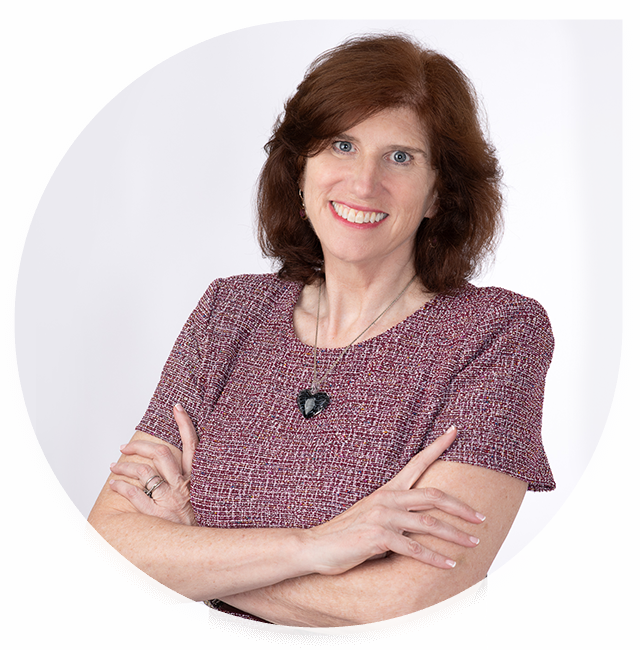
Dr. Lori A. Orlando, MD MHS MMCI is a Professor of Medicine, health services researcher, and Director of the Precision Medicine Program in the Center for Applied Genomics and Precision Medicine at Duke University. She received her MD from Tulane University in 1998, MHS from Duke in 2004, and MMCI from Duke in 2019. Her current research program focuses upon using technology to overcome barriers to family health history-based risk assessment and using high quality family health histories to guide clinical care.